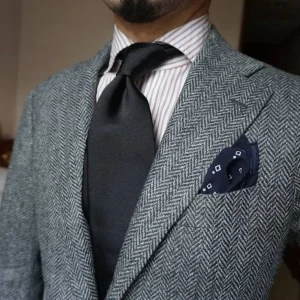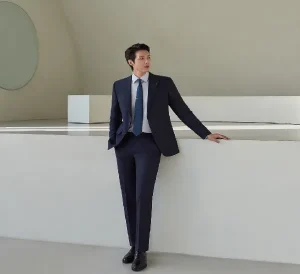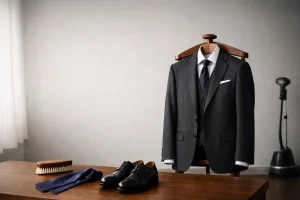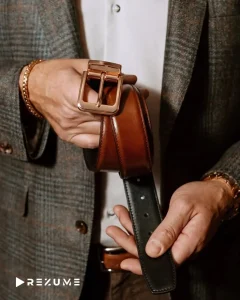

A belt is one of the smallest pieces of a tailored wardrobe, and often one of the most overlooked. Yet it’s also one of the few accessories worn against a bespoke suit every single day, which makes the gap between a genuinely custom belt and an off-the-shelf one worth understanding.
The word “bespoke” gets applied loosely to belts, much as it does to suits and shirts. A belt stamped with initials or cut slightly shorter at checkout gets marketed as custom, even though nothing about how it was actually made differs from a standard production run.
This guide breaks down what genuinely separates a bespoke leather belt from an off-the-shelf one, so the difference is clear before you buy.
Most of the attention in building a wardrobe goes toward the suit itself, fabric, fit, lapel style, construction. A belt is treated as an afterthought, picked up quickly to match whatever color is already on hand.
But a mismatched or poorly made belt is one of the few details that can visibly undercut an otherwise well-tailored outfit. It sits at the waist, directly beneath the jacket, exactly where the eye naturally lands.
Understanding what actually makes a belt well made, not just well branded, closes that last gap in an otherwise carefully built wardrobe.
As with suits, true bespoke construction starts from an individual specification built around the person, not a standard product adjusted slightly at the point of sale.
For a belt, that means length cut precisely to the wearer’s waist measurement rather than selected from pre-set sizes, leather chosen specifically rather than from a single standard stock, and a buckle fitted to proportion rather than attached as a default. Embossing initials onto a standard belt, or trimming a few holes differently, isn’t bespoke construction, it’s personalization applied to an otherwise mass-produced product.
Leather quality varies enormously, and it’s one of the least visible differences at first glance, since lower-grade leather can be finished to look convincing on a shelf.
Full-grain leather uses the complete, unaltered top layer of the hide, retaining its natural grain and strength. It develops a rich patina over years of wear and tends to be the standard choice for genuinely well-made belts.
Top-grain leather has the outermost layer sanded away to remove imperfections, producing a more uniform surface but losing some of the fiber strength and natural character of full-grain.
Bonded or genuine leather is often made from scraps and leftover fibers, bonded together with adhesive. It’s common in inexpensive off-the-shelf belts and tends to crack, peel, or delaminate well before a well-made leather belt would show comparable wear.
Off-the-shelf belts at a range of price points can use any of these, often without stating which clearly. A bespoke belt-maker should be able to tell you exactly which leather is used, and why.
Edge finishing is one of the clearest tells between hand-finished and mass-produced belt construction.
A well-made belt has edges that are burnished, a process of sealing and smoothing the raw leather edge by hand, rather than simply cut and left raw or coated with a quick machine finish. Hand-burnished edges resist fraying and wear far better over time than machine-finished alternatives.
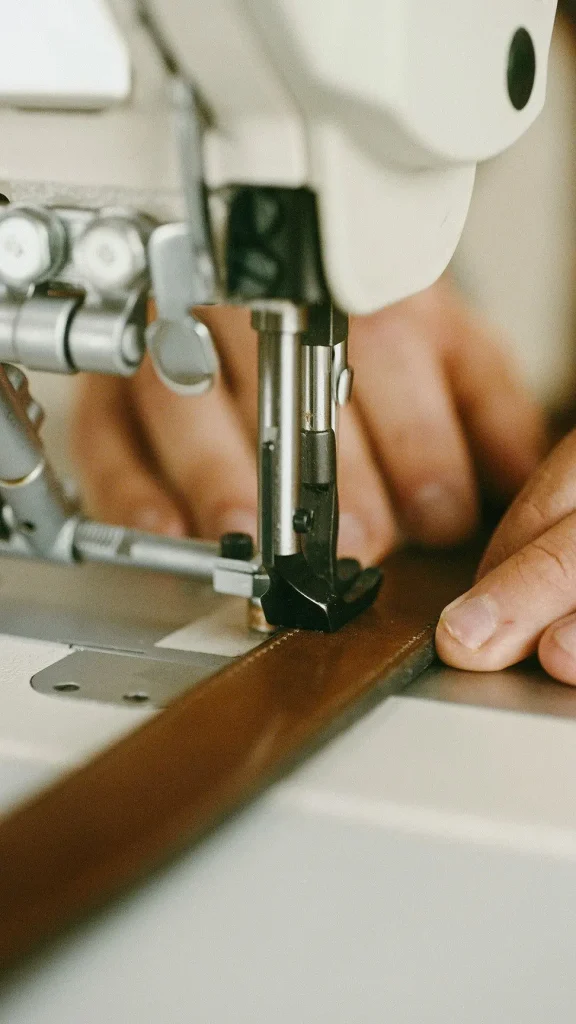
Stitching quality matters just as much. Hand-stitched or saddle-stitched construction uses a technique where each stitch is individually locked, meaning a single broken stitch doesn’t cause the whole seam to unravel, unlike standard machine lockstitching common in mass production.
Off-the-shelf belts come in standard sizes, typically in two-inch increments, which means most buyers end up with a belt slightly too long or too short rather than exactly right.
A properly fitted belt should sit with one or two holes of adjustment room on either side of the buckle, not stretched to the last hole or hanging with excess length tucked through the loops. A bespoke belt is cut to the wearer’s actual waist measurement, accounting for how the belt will be worn, at the natural waist or slightly lower with trousers.
This precision matters particularly for a belt worn with a bespoke suit, where trouser rise and waistband have already been built around exact measurements. A standard-length belt undercuts that same precision at the one point where it’s most visible.
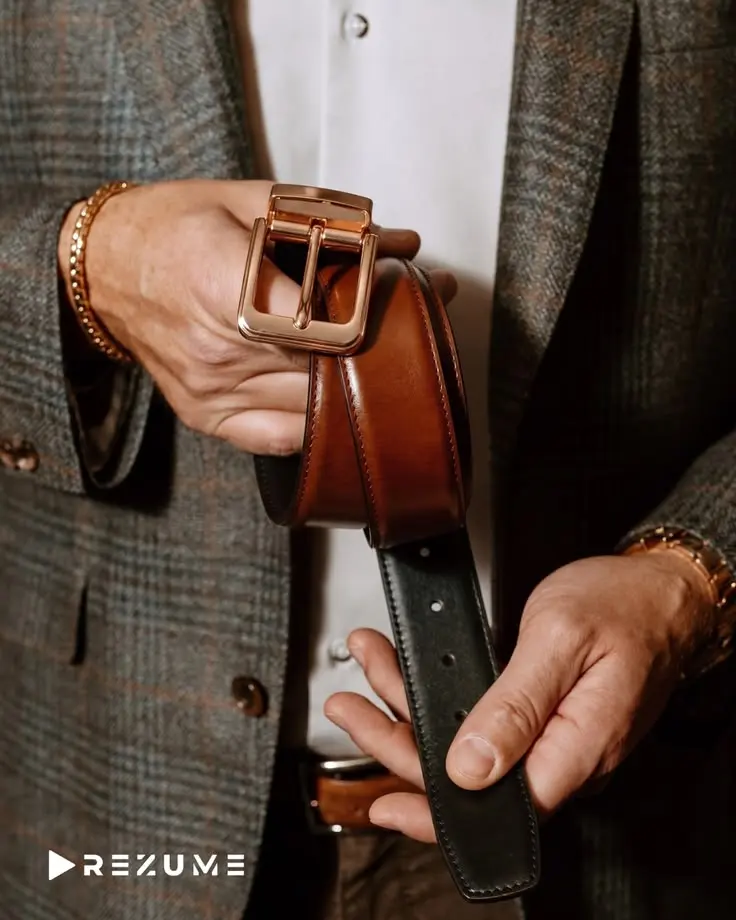
Buckle size and finish affect how formal or casual a belt reads, independent of the leather itself.
A slim, understated buckle in a matte or brushed finish suits business and formal wear, staying visually quiet beneath a jacket. A larger or more decorative buckle shifts a belt toward casual territory, regardless of how good the leather is.
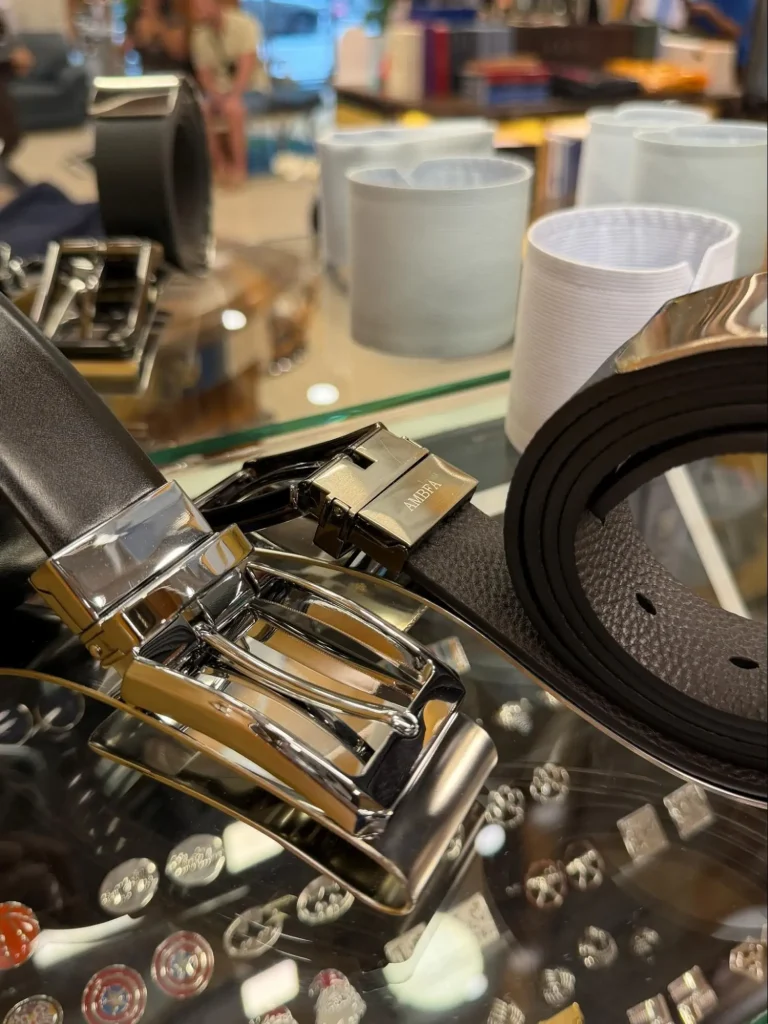
Off-the-shelf belts typically pair one standard buckle with each style, with little room to adjust proportion. A bespoke belt allows buckle size to be matched to the wearer’s build and the belt’s intended use, business, formal, or more relaxed wear.
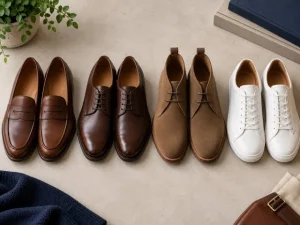
Off-the-shelf belts are produced in a narrow range of standard colors, which rarely match a specific pair of bespoke shoes or a particular leather tone exactly.
A bespoke belt can be dyed or selected to match a specific shoe color precisely, rather than settling for the closest available standard shade. This matters more than it might seem, since a visibly mismatched belt and shoe color is one of the more noticeable style inconsistencies in an otherwise well-put-together outfit.
Belt width should correspond to the belt loops on the trousers it’s paired with, something standard off-the-shelf sizing doesn’t always account for precisely.
Formal and business trousers typically call for a narrower belt, generally in the 1 to 1.25 inch range, while casual trousers can accommodate a slightly wider belt. A belt too wide for its loops bunches uncomfortably, while one too narrow looks visually undersized against the waistband.
Since bespoke trousers are built with specific loop dimensions, matching belt width precisely is easier to get right when the belt itself is made to the same standard.
This is where the quality difference becomes most apparent over time, well after the point of purchase.
A full-grain leather belt, properly constructed, develops a deeper color and softer texture with years of wear, a patina that off-the-shelf bonded or coated leather simply cannot replicate. Lower-grade leather tends to crack, peel at the surface coating, or lose shape at the fold points well before a well-made belt shows comparable wear.
A bespoke leather belt costs more upfront than an off-the-shelf alternative, reflecting the leather quality, hand construction, and precise fitting involved.
For an accessory worn daily alongside a bespoke suit, the cost difference tends to be worth it over the belt’s working life, both in how it ages and in how consistently it complements a wardrobe built around precise fit elsewhere. For occasional wear, a quality off-the-shelf belt may be a reasonable middle ground.
A few simple checks reveal more than a product label does.
Flex the belt gently. Full-grain leather flexes smoothly without creasing sharply or showing a layered, fibrous edge. Bonded leather tends to crease unnaturally and may show a visibly different texture at the cut edge.
Check the edges closely. Burnished, smooth edges indicate hand finishing, while rough, raw, or heavily coated edges suggest faster production methods.
Smell the leather. Genuine, well-tanned leather has a distinct, natural smell. A strong chemical or plastic smell often indicates bonded or heavily treated material.
At AMBFA Tailor, custom leather belts are made to complement the same precision used in our bespoke suits, cut to your exact waist measurement, finished with hand-stitched construction, and color-matched to your shoes rather than settled for the closest standard shade.
Our team can guide you through leather selection, buckle proportion, and width suited to the trousers you’ll be wearing the belt with, so the finished piece completes your wardrobe rather than standing apart from it.
With more than 60 years of tailoring heritage in Bangkok, AMBFA Tailor brings that same attention to detail to every custom leather belt we make.