Listen to this article
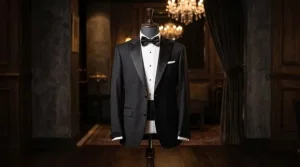
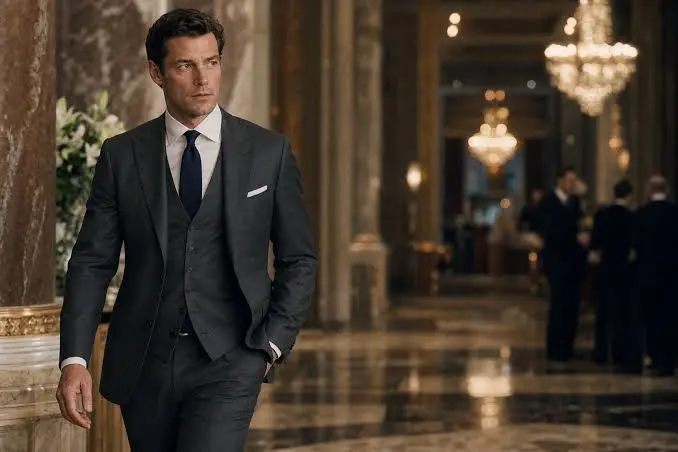
The three-piece suit has a particular standing in professional dress. It reads as composed, prepared, and quietly senior, which is why it has remained a favorite among partners, executives, and judges long after most offices relaxed their dress codes.
For senior professionals in Chevy Chase, the appeal is practical as well as stylistic. A waistcoat adds structure to an outfit, gives you another way to wear the same suit, and, when it is cut properly, makes the whole garment look more resolved.
This guide covers what a bespoke waistcoat should offer, how a three-piece suit should fit, when to wear one, and how to order a bespoke suit in Chevy Chase without a local storefront.
Why the Three-Piece Suit Still Matters
A waistcoat does more than add a layer. It changes how the suit reads.
With the jacket open, a waistcoat gives the torso a clean, continuous line, covers the waistband, and keeps the shirt neat through a long day. With the jacket on, it adds subtle depth at the chest. The effect is a more finished look, one that suggests care without announcing it.
For professionals whose work involves negotiation, testimony, or leadership, that quiet authority is useful. It signals preparation rather than fashion.
What a Waistcoat Actually Does
It helps to know the functional case for a waistcoat, since it explains why a good one is worth having.
A waistcoat covers the gap between the trouser waistband and the shirt, which keeps the front line clean when the jacket is unbuttoned. It also allows you to remove the jacket in a warm room and still look dressed, which is useful in long meetings, dinners, and events where a jacket comes off.
It also gives you flexibility. A three-piece suit can be worn as a suit, as a jacket and trousers, or as a waistcoat and trousers, which makes it more versatile than a two-piece of the same cost.
Is a Three-Piece Suit Appropriate for Business?
In most professional settings, yes, as long as the cut is classic and the cloth is conservative.
A navy or charcoal three-piece suit in a plain or subtly textured cloth is appropriate for client meetings, board settings, court appearances, and formal business events. It tends to read as more formal than a two-piece, so it suits environments where a traditional standard still applies.
In more relaxed offices, it can look dressed up. The right choice depends on your workplace and on how you want to be read in the room.
How a Waistcoat Should Fit
Fit is where bespoke makes the biggest difference, because a waistcoat has very little room for error.
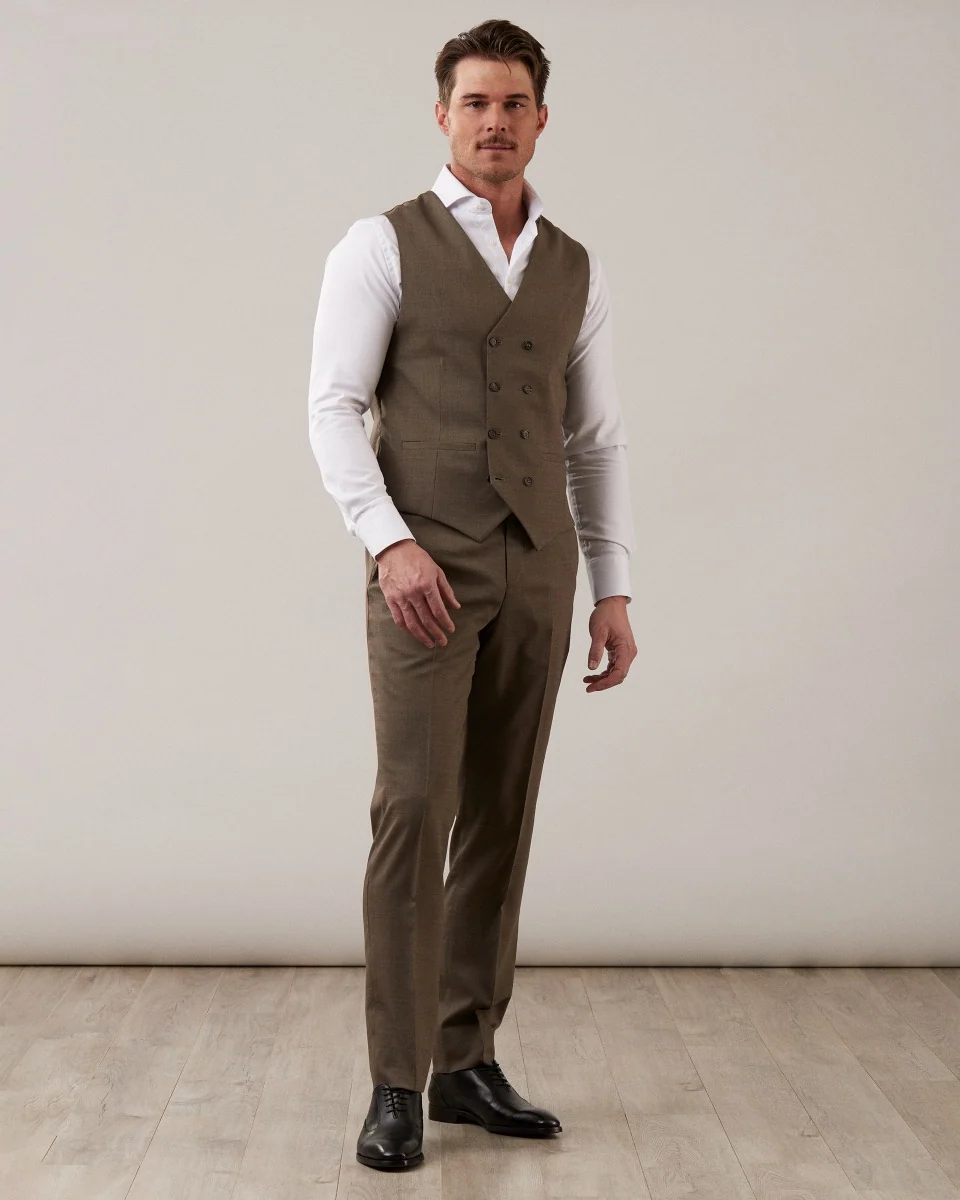
A well-cut waistcoat should sit close to the body without pulling. It should be long enough to cover the waistband of the trousers, so no shirt shows between the two when you stand, sit, or reach. It should lie flat across the chest and stomach without gaping at the armholes or bunching at the back.
The armholes should be cut high enough to avoid exposing the shirt at the side, and the neckline should sit comfortably against the collar. Because the waistcoat moves with your torso, a pattern built to your measurements is far easier to get right than a standard size.
Waistcoat Length and Points
The bottom of a waistcoat can be cut in different ways, and the choice affects how it looks.
A pointed hem comes to a V at the front and is the traditional choice, giving a clean, elongated line. A straight hem is cut level across the front and reads as slightly more modern. Either works, as long as the waistcoat covers the waistband and sits at the correct length for your torso.
The length should be balanced against the jacket, so the waistcoat does not show below the jacket hem when you stand naturally.
Single-Breasted or Double-Breasted Waistcoat
Most waistcoats are single-breasted, which is the classic and most versatile option.
A single-breasted waistcoat typically has five or six buttons and sits neatly under a suit jacket. It is the usual choice for a three-piece suit, and it works for a wide range of builds.
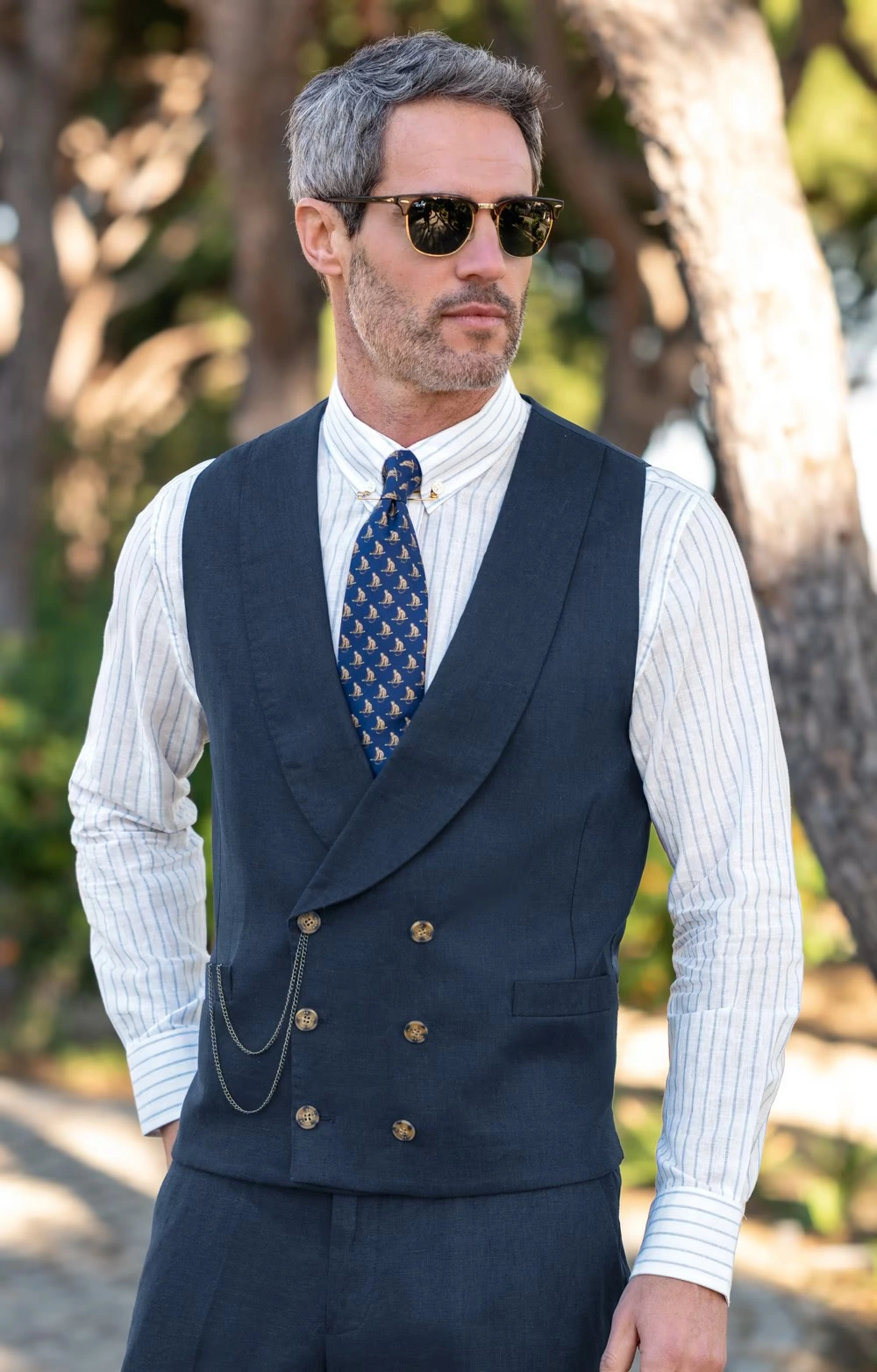
A double-breasted waistcoat is more formal and more distinctive, with overlapping fronts and a double row of buttons. It offers a strong, traditional silhouette, and it suits professionals who want a more assertive look.
For a first waistcoat, a single-breasted style is the safest choice.
Lapels or No Lapels
Some waistcoats have small lapels, and some do not.
A waistcoat without lapels is the most common, and it creates a clean, uncluttered line. A waistcoat with lapels, often a shawl or a notch, is a more formal and more decorative option, and it works well with a double-breasted style or a formal suit.
The choice is largely a matter of taste. A tailor can advise which suits your build and the style of your jacket.
Buttoning Etiquette
A small rule governs how a waistcoat is worn, and following it keeps the look correct.
The bottom button is traditionally left undone. This is a long-standing convention, and it allows the waistcoat to sit comfortably when you sit down. The rest of the buttons are fastened.
Many waistcoats are cut with this in mind, so the bottom button is slightly offset. When the suit jacket is on, button it as usual, leaving the waistcoat visible beneath it.
Matching or Contrast Waistcoat
A waistcoat can be cut from the same cloth as the suit, or from a different one.
A matching waistcoat is the classic approach, and it creates a true three-piece suit with a unified look. It is the most formal and the most conservative choice.
A contrast waistcoat, in a different cloth or color, gives a more individual look. A soft grey or fawn waistcoat with a navy suit, or a textured cloth with a plain jacket, can look refined when handled carefully. Contrast works best in smart casual or social settings, while matching is safer for formal business. For more ideas, see our guide to tailored vest styles in Maryland.
Cloth for a Three-Piece Suit
A three-piece suit carries an extra layer, so cloth weight matters.
A mid-weight worsted wool suits much of the year in the DMV area, and it holds a clean line across all three pieces. ผ้าแฟลนเนล and heavier woolens suit winter, while lighter worsteds suit warmer months. Because the waistcoat adds warmth, a slightly lighter cloth than you would choose for a two-piece often feels better.
A tailor can help you choose fabric for the climate and the way you will wear the suit.
Colors That Suit Senior Professionals
For a three-piece suit, restrained colors give the most flexibility.
Navy is the most versatile, and it works for nearly every setting. Charcoal is slightly more formal and neutral. Mid-grey is a lighter option for spring and early autumn. A subtle pinstripe or a fine herringbone can add interest without moving away from conservative territory.
Avoid strong patterns and bright colors in a three-piece suit, since the extra layer amplifies whatever the cloth shows.
Working With the Shirt and Tie
The waistcoat changes how the shirt and tie should be handled.
A tie should be tucked into the waistcoat, or fall just behind it, so it does not hang below the waistcoat hem. A collar that sits cleanly against the neckline of the waistcoat looks sharper, and a well-cut custom shirt with a body fitted to the torso prevents bunching beneath the waistcoat.
A tie bar or collar bar can help keep the tie in place, though many wearers prefer to leave the tie unadorned.
A Pocket Watch, If You Wish
A traditional accessory for a waistcoat is a pocket watch on a chain.
Many waistcoats are cut with a small pocket for this purpose, often with a buttonhole for the chain. It is optional, and in most business settings it is a quiet personal touch rather than a necessity. If you want it, mention it at the fitting so the tailor can add the pocket and buttonhole.
Construction and Lining
The quality of a waistcoat shows in details you rarely see.
A well-made waistcoat has a lined interior that helps it hang cleanly and feel comfortable. The back is usually made of a lining fabric, with an adjuster, such as a small buckle or a cinch strap, that lets you fine-tune the fit. Strong buttonholes and clean seams add durability.
The jacket in a three-piece suit benefits from full canvas construction, which lets it drape cleanly over the waistcoat without bulk. Because the two layers sit close together, how the jacket is built affects how smooth the whole suit looks.
Why Bespoke Makes the Difference
A waistcoat is one of the hardest garments to fit off the rack.
It is cut close to the body, so an inch of difference in length or width is visible immediately. Ready-made waistcoats are usually sold as part of a standard suit size, which assumes a fixed relationship between chest, waist, and torso length. Many people find the waistcoat too short, too tight, or too loose, with no easy way to fix it.
A bespoke waistcoat is built from an individual pattern, so length, armholes, and the closeness of the fit are all set to your body. The jacket, waistcoat, and trousers are also designed to work together, which is what makes a three-piece suit look like one garment.
Adding a Waistcoat to an Existing Suit
You do not always need to order a full three-piece suit.
If you already have a bespoke suit, a waistcoat can often be added later from the same cloth, as long as enough cloth is available, or in a complementary cloth. Ordering it as part of the original suit is more reliable, since the cloth and dye lot will match exactly. If you think you might want a waistcoat later, it is worth asking the tailor to keep a record of your cloth.
Getting a Bespoke Three-Piece Suit Without a Local Storefront
Genuinely bespoke tailoring is limited in the Chevy Chase area, where most options lean toward retail and alterations.
Some established bespoke houses serve the region through scheduled trunk shows, taking measurements in person and building the garments at their home workshop. For a senior professional with a demanding schedule, a small number of planned appointments often works better than repeated shop visits.
If you take this route, ask how established the visit schedule is, how many fittings are included, and whether measurements are kept on file for reorders.
Bespoke Waistcoats and Three-Piece Suits at AMBFA Tailor
AMBFA Tailor serves professionals across the DMV area, including Chevy Chase, through scheduled trunk shows in Washington D.C., bringing the same bespoke process used in our Bangkok workshop to the region.
Every suit is built from an individual pattern with full canvas construction. Our tailoring team can advise on how a waistcoat should be cut for your build, whether a three-piece suit fits your work, and which cloth and weight suit the DMV’s seasons. Measurements are kept on file after your first fitting, so reorders and additions can often be handled between visits.
With more than 60 years of tailoring heritage in Bangkok, AMBFA Tailor brings that same craftsmanship to every professional we fit in the DMV area.
Frequently Asked Questions
Is a three-piece suit too formal for the office?
Not in most professional settings, particularly in navy or charcoal. It reads as more formal than a two-piece, so it suits traditional workplaces best, and can look dressed up in a very relaxed office.
Should the bottom button of a waistcoat be fastened?
No. Leaving the bottom button undone is a long-standing convention, and it lets the waistcoat sit comfortably when you sit down.
Can I add a waistcoat to a suit I already own?
Often yes, but it is more reliable to order it with the original suit, since the cloth and dye lot will match. Ask your tailor to keep a record of your cloth if you may want one later.
Can I get a bespoke three-piece suit in Chevy Chase without a local tailor?
Yes, through trunk show tailoring, where a bespoke house visits the DMV area on a set schedule to take measurements before building the suit at its home workshop.
A Finished Look for Senior Professionals
A three-piece suit works because it is complete. The jacket, waistcoat, and trousers are cut to sit together, and when the fit is right, the suit looks settled and authoritative without trying.
If you would like to explore a three-piece suit built around your measurements and your work in the DMV area, book an appointment with AMBFA Tailor and connect with our team about our next scheduled visit to Washington D.C.
Book a D.C. appointment