
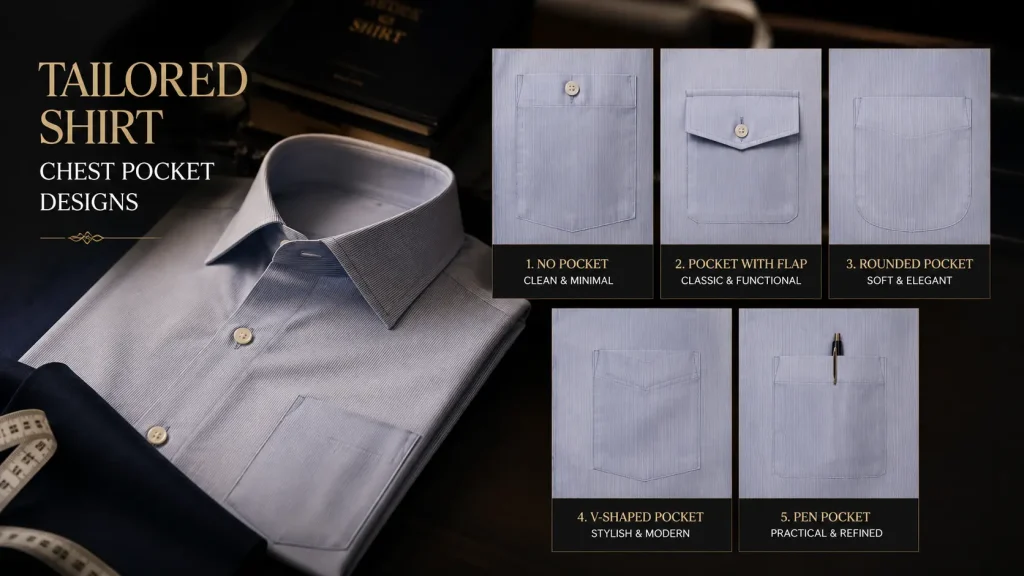
When designing a tailored shirt, it is easy to focus on the fabric, collar, cuffs, and fit while overlooking one of the smallest details: the shirt pocket.
A shirt pocket may seem like a minor design choice, but its shape, size, position, and construction can significantly influence the overall appearance of a custom shirt. The right pocket can make a shirt look balanced and practical, while the wrong style may make an otherwise well-designed shirt feel too casual, too formal, or visually unbalanced.
One of the advantages of having a shirt custom-made is that you are not limited to a standard pocket design. You can choose details that match how you plan to wear the shirt and the style you want to achieve.
So, how do you choose the right pocket style for a tailored shirt?
A shirt pocket has both a practical and aesthetic purpose. Traditionally, shirt pockets were designed to provide convenient storage for small everyday items, but today they are also an important part of a shirt’s overall design.
Because the pocket sits prominently on the chest, even a small change in its shape or placement can affect the proportions of the shirt.
For example, a simple rounded pocket can give a shirt a classic appearance, while a patch pocket with a more angular shape can create a more casual and contemporary look. Pocket placement can also influence how the chest area appears, particularly when the shirt is worn underneath a jacket.
When you are ordering a tailored or bespoke shirt, these small details give you an opportunity to create something that feels more personal than an off-the-rack shirt.
One of the first questions to consider is whether you actually need a pocket.
For a formal dress shirt, especially one intended to be worn with a business suit or tuxedo, a pocket is not always necessary. A clean shirt front without a pocket can create a more streamlined and formal appearance.
However, a single chest pocket is perfectly appropriate for many business and everyday shirts. It can add a traditional character while also providing a practical place to carry small items.
The decision largely depends on how you intend to wear the shirt.
If you want a highly formal shirt for important business meetings, weddings, or black-tie occasions, you may prefer a clean front without a pocket. If you want a versatile shirt for business-casual settings, travel, or everyday wear, a single chest pocket can be a useful and stylish option.
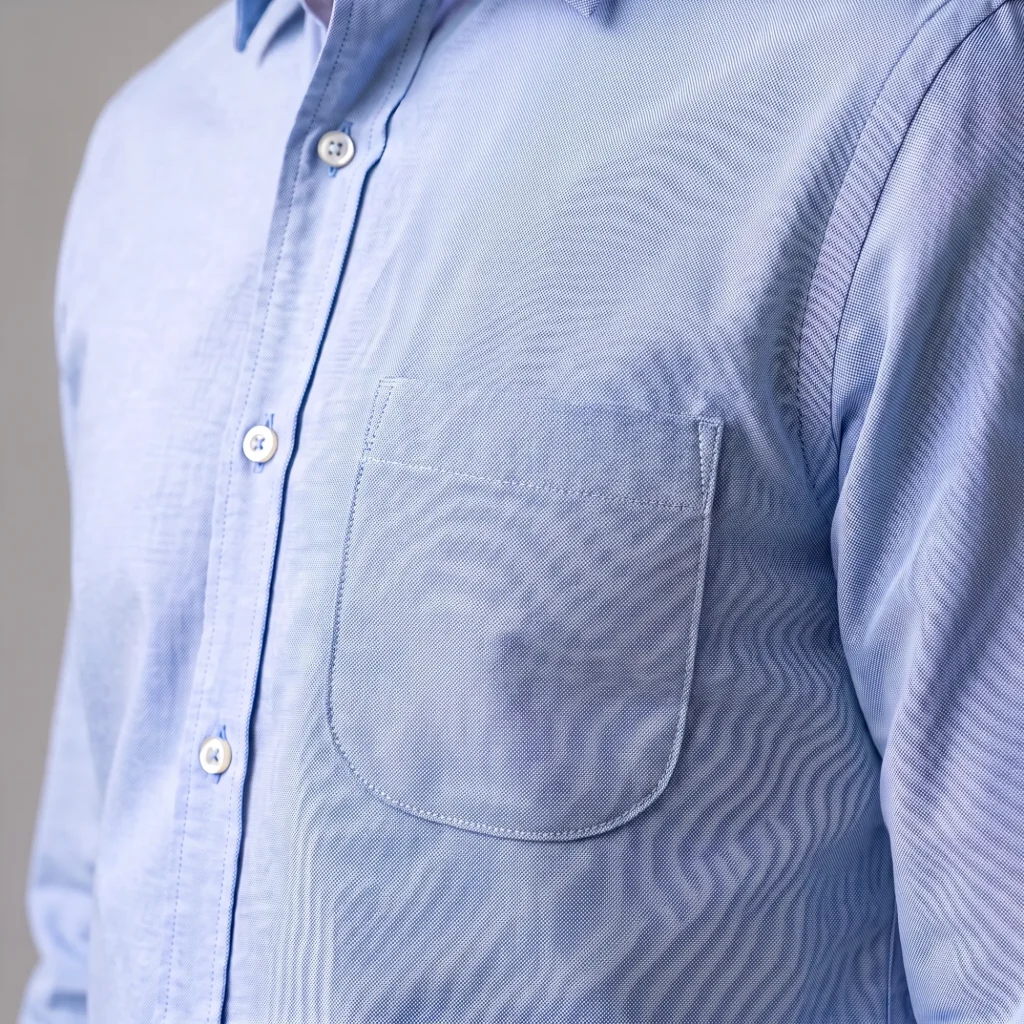
The rounded pocket is one of the most recognizable shirt pocket styles.
Its softer edges create a traditional appearance and work particularly well on classic business shirts and everyday tailored shirts. Because the design is relatively understated, it can work with many different fabrics and collar styles.
A rounded pocket is especially suitable if you prefer a timeless wardrobe rather than following short-lived trends.
For a white, blue, or striped business shirt, a simple rounded pocket can provide just enough visual detail without distracting from the overall design.
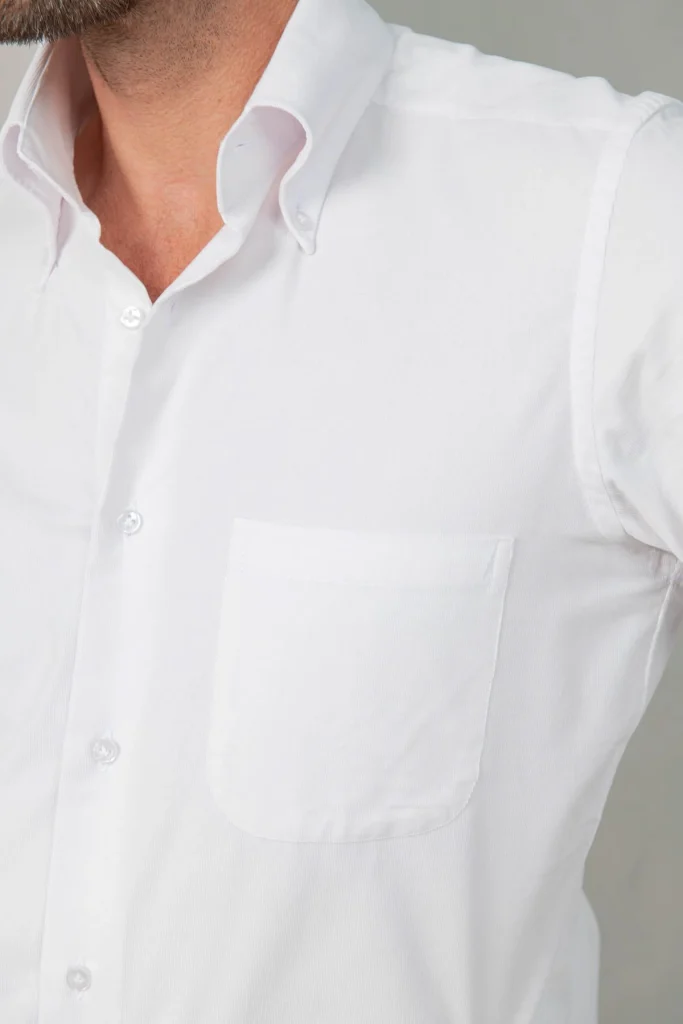
A square or slightly angled pocket can give a tailored shirt a more contemporary appearance.
Compared with a traditional rounded pocket, sharper lines tend to create a cleaner and more structured look. This can work particularly well with modern shirt designs and casual fabrics.
The exact angle and proportions should still be considered carefully. A pocket that is too large or aggressively angled can become the dominant feature of the shirt.
For a custom shirt, your tailor can adjust the proportions so that the pocket works with your body shape and the overall dimensions of the shirt.
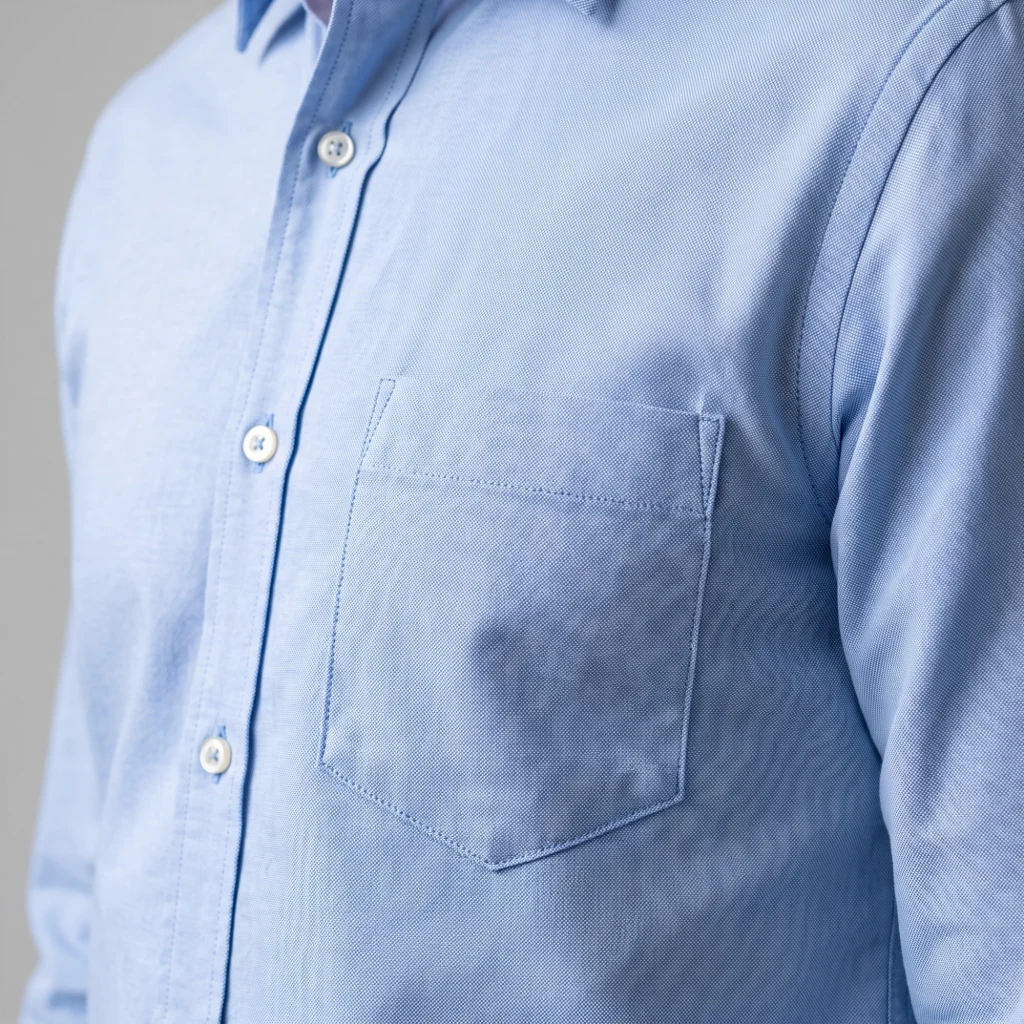
Patch pockets are commonly associated with casual and relaxed shirts.
Instead of being integrated into the shirt front, the pocket is constructed as a separate piece of fabric and attached directly to the outside of the shirt. This creates more visible texture and gives the shirt a less formal character.
Patch pockets can work particularly well with casual cotton, linen, denim, chambray, and heavier fabrics.
They are a natural choice for shirts intended to be worn independently rather than underneath a formal suit jacket.
For example, a lightweight linen shirt with a simple patch pocket can create a relaxed look that works well in Bangkok’s warm climate.
For most tailored shirts, one chest pocket is the most versatile option.
A single pocket keeps the design relatively clean while still providing some practical functionality. It works well for business-casual shirts, everyday shirts, and many classic styles.
Two chest pockets create a noticeably more casual appearance. This design is often associated with workwear, military-inspired shirts, safari shirts, and other relaxed styles.
If you are designing a shirt specifically to wear with a business suit, one pocket or no pocket will usually create a more refined appearance.
If the shirt is intended to be worn casually, two pockets can be an interesting design choice.
The best pocket style depends heavily on where and how you plan to wear the shirt.
A business shirt generally benefits from a restrained pocket design. A simple single pocket or no pocket can maintain a clean appearance under a suit jacket.
A casual shirt gives you more freedom. You can experiment with patch pockets, larger proportions, contrasting fabrics, or more distinctive shapes.
A travel shirt may benefit from additional practical features, while a weekend shirt can prioritize visual character and comfort.
When ordering a custom shirt, think about the situations in which you will actually wear it before choosing the pocket.
Choosing a pocket style is not only about deciding between rounded, square, or patch pockets. The size of the pocket is equally important.
A pocket that is too large can make the chest area appear heavier, while one that is too small may look disproportionate.
The pocket should work with the overall proportions of the shirt, including the collar, placket, sleeve length, and chest width.
This is one area where custom tailoring has a significant advantage over ready-to-wear clothing. Instead of using one standard pocket size for every customer, a tailor can consider the proportions of the individual wearer.
The goal is for the pocket to look like a natural part of the shirt rather than an added feature.
Pocket placement can subtly change the appearance of a shirt.
A pocket positioned too high or too low can make the shirt look unbalanced. Its horizontal position should also work with the wearer’s chest and overall body proportions.
A professional tailor will normally consider the relationship between the pocket, shoulder line, armhole, and center of the shirt when determining the appropriate placement.
This becomes particularly important when working with patterned fabrics.
For example, stripes or checks can make incorrect pocket placement much more noticeable because the pattern may not align properly with the surrounding fabric.
If you are choosing a custom shirt made from stripes, checks, or other patterned fabrics, pocket construction deserves extra attention.
A well-made shirt should take the fabric pattern into consideration when positioning and constructing the pocket. With stripes and checks, the pattern may need to be carefully aligned across the pocket and shirt body.
This additional attention can create a much cleaner and more refined appearance.
It is one of those details that may not immediately stand out when done correctly, but becomes noticeable when it is done poorly.
A shirt should be considered as a complete design rather than a collection of individual details.
The pocket should work with the collar, cuffs, buttons, placket, fabric, and overall silhouette.
For example, a classic rounded pocket may naturally complement a traditional spread collar and French cuffs. A casual patch pocket may work better with a button-down collar and relaxed cuffs.
This does not mean every element needs to follow the same style. In fact, thoughtful contrast can create a more interesting shirt. The important thing is maintaining a sense of balance.
The fabric you choose can also influence which pocket style works best.
Lightweight cotton and fine poplin often look best with relatively clean and understated pocket designs. Oxford cloth, linen, chambray, denim, and heavier cotton fabrics can accommodate more casual patch pockets and stronger shapes.
Patterned fabrics also require additional consideration because the pocket can interrupt the visual flow of the pattern.
When designing a tailored shirt, your tailor should be able to recommend a pocket style that works with the fabric rather than treating the pocket as an isolated choice.
Sometimes, the best pocket is no pocket at all.
A shirt without a chest pocket can create a particularly clean and elegant appearance. This is often preferred for formal shirts and shirts designed specifically to be worn under tailored jackets.
Without a pocket, the shirt front becomes visually simpler, allowing the collar, fabric, buttons, and jacket to become more prominent.
If you are building a versatile wardrobe, having some shirts with pockets and some without them can give you different styling options.
One of the biggest advantages of a tailored shirt is the ability to customize details that are normally fixed on ready-to-wear shirts.
Instead of choosing a shirt and accepting whatever pocket design comes with it, you can discuss the pocket shape, size, placement, and construction with your tailor.
The same principle applies to other shirt details.
You can customize the collar shape, cuff style, button selection, fabric, placket, monogram, and overall fit to create a shirt that matches your personal style.
These details may appear small individually, but together they can make a significant difference to the finished garment.
If you are unsure which pocket style to choose, start by thinking about how you will wear the shirt.
For formal business shirts, a clean front or simple single chest pocket is generally a safe choice. For business-casual shirts, a classic rounded or square pocket can provide a balance between practicality and refinement.
For casual shirts, patch pockets offer more freedom and can complement relaxed fabrics such as linen, chambray, and heavier cotton.
Most importantly, consider the shirt as a whole. The pocket should complement the fabric, collar, cuffs, fit, and intended use rather than simply being chosen because it looks good on its own.
At AMBFA Tailor, we believe that a well-tailored shirt is defined by the details.
From the fabric and collar to the cuffs, buttons, fit, and pocket design, every element can be considered as part of the overall garment.
Our custom shirt service in Bangkok allows clients to personalize their shirts according to their individual style and requirements. Whether you are looking for a classic business shirt, a relaxed casual shirt, or something designed for a specific occasion, our tailoring team can help you select the details that work together.
A shirt pocket may be a small part of the garment, but thoughtful details are what make a custom shirt feel truly personal.
If you are interested in creating a tailored shirt in Bangkok, visit AMBFA Tailor to discuss your preferred style, fabric, fit, and customization options with our team.