

In the world of tailoring, there’s an invisible line that separates the exceptional from the ordinary and often, it lies in the stitching. While most people may not stop to examine how a suit is sewn, true sartorialists know that the distinction between hand-stitching and machine-stitching is what separates a mass-produced garment from a work of art.
If you’ve ever wondered why one suit feels more comfortable, moves more fluidly, or simply looks more refined than another, it could be because of what’s beneath the surface. Let’s explore what hand-stitched and machine-stitched suits really mean, how to spot the difference, and why it matters, especially when you’re investing in custom tailoring.
Hand-stitching is the traditional method of sewing garments by hand using a needle and thread, without relying on machines. This technique allows for flexibility, precision, and a degree of personalization that machines simply can’t replicate. Each stitch is placed by a skilled tailor who considers fabric tension, drape, and durability, which creates a garment that moves and breathes with your body.
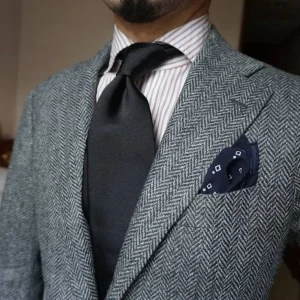
In bespoke tailoring, hand-stitching is used in key areas: lapels, armholes, canvas construction, buttonholes, and even finishing hems. These areas benefit from the nuanced flexibility and comfort that only hand-stitching can provide.
Machine-stitching, on the other hand, is the process of using industrial sewing machines to produce garments in high volumes and speed. While machine stitching is consistent and efficient, it often lacks the subtlety needed for precise shaping and natural movement.
Most ready-to-wear (RTW) and even many made-to-measure (MTM) suits are heavily reliant on machines. While these suits may look polished on the hanger, they often sacrifice long-term comfort and fit, especially as the suit is worn over time.
Knowing whether your suit is hand-stitched can help you understand its quality and value. Here are the subtle, tell-tale signs:
Hand-stitched buttonholes are usually slightly irregular, with a soft, raised edge and beautiful detailing. You may see slight variations in spacing or shape, but this is a good thing. Machine-stitched buttonholes, by contrast, are perfect but flat, uniform, and can sometimes feel stiff or overly tight.

Gently pinch the chest area of your suit. If you feel a soft, floating layer inside (known as a full canvas), it’s likely been hand-padded, a labor-intensive hand-stitching technique that gives the suit natural roll and shape. Machine-stitched fused suits will feel stiff and flat, with little-to-no flexibility between layers.
Pick stitching is the small decorative (and functional) stitching found around the edges of lapels, pockets, and cuffs. Hand-made pick stitching appears uneven under close inspection because each stitch was placed with intention. Machine-made pick stitching is often perfectly symmetrical and straight, which may lack personality and character.
Hand-sewn armholes allow for greater mobility and a cleaner drape because the stitch tension can be adjusted based on the fabric and body shape. Machine-sewn sleeves often restrict movement, and over time, they may cause pulling or puckering at the shoulder seam.
Open the jacket and look at the seams and lining. If the stitches look delicate, irregular, and slightly different throughout the garment, you’re likely wearing a hand-finished suit. If everything looks identical, straight, and robotic, it was done by a machine.

It’s not just about visual appeal, it’s about fit, comfort, and longevity.
A hand-stitched suit conforms to your body over time. It softens and adapts to your movements. It becomes an extension of you. Machine-made suits remain rigid, and though they may be cheaper and faster to produce, they tend to degrade in shape and comfort with frequent wear.
For discerning gentlemen who value craftsmanship and elegance, hand-stitching is a mark of pride. It’s the kind of detail that only you and a trained eye might notice, but it transforms the way you feel in your suit.
If you’re investing in a bespoke suit for important moments, a wedding, a gala, high-level professional meetings, or simply as a foundational wardrobe piece, opting for hand-stitching is the superior choice. The garment will last longer, feel more luxurious, and offer a fit that improves with time.
Machine-stitching may be suitable for everyday office wear or those looking for a quick, budget-conscious alternative. But if you appreciate elegance, form, and the subtle power of wearing something truly custom, hand-stitched tailoring is an experience worth having.
If you’re curious about experiencing the difference for yourself, AMBFA Bespoke Tailor is one of Bangkok’s premier destinations for handcrafted garments. From precision-fitting suits to subtle, hand-finished detailing, every AMBFA creation is a nod to timeless sartorial standards.
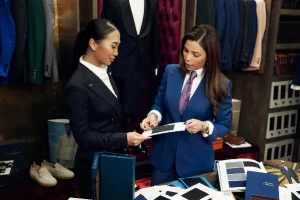
At your appointment, you’ll not only select your fabric and design but also get a deeper look into our commitment to craftsmanship. From hand-padded lapels to delicately sewn buttonholes, our artisans elevate every stitch with purpose.
Book your bespoke appointment today and discover how real tailoring feels. With AMBFA, it’s not just a suit, it’s your story, stitched by hand.